
By Beverly Nelson
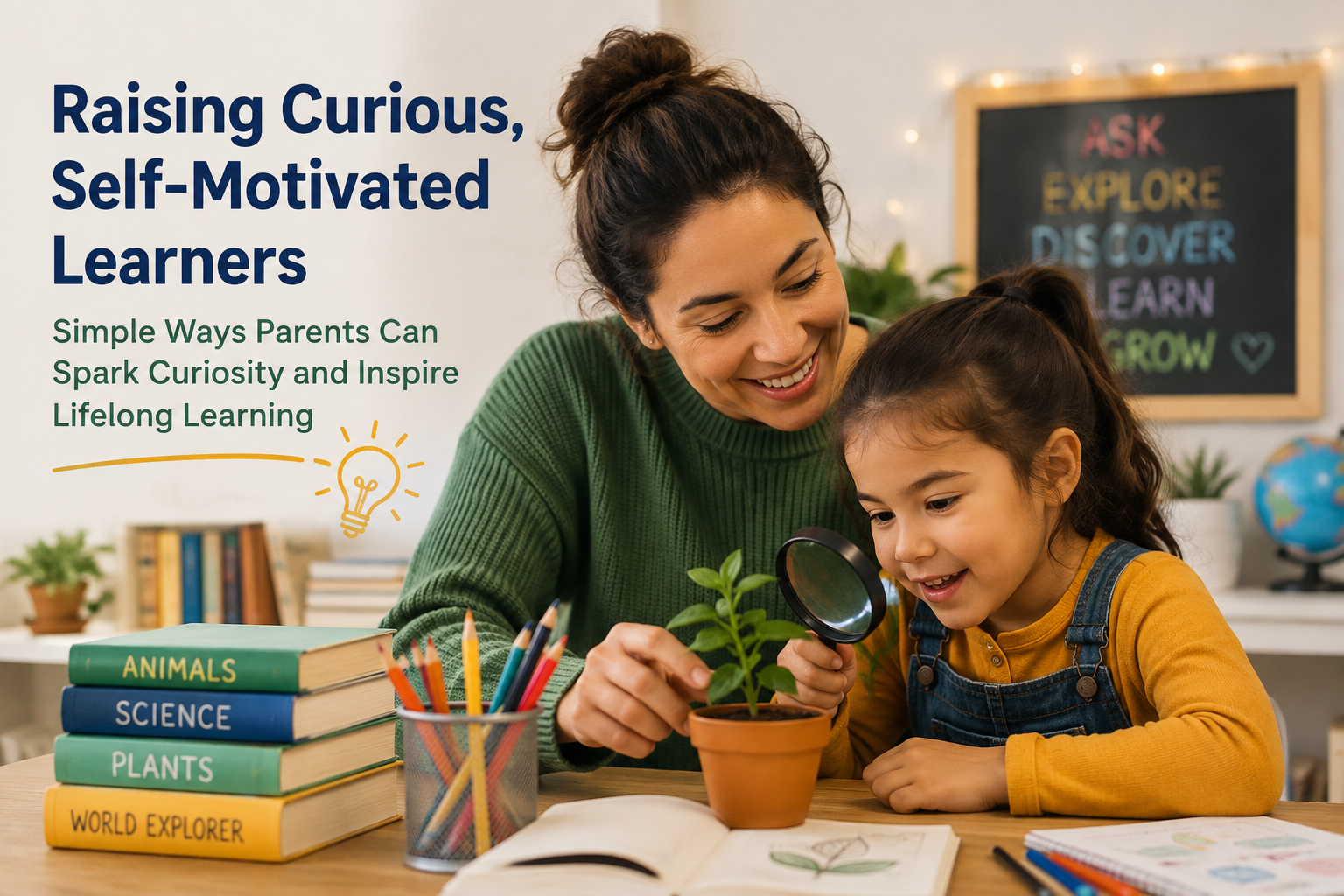
Busy parents juggling work, routines, and screen time often sense a hard tension: kids begin life full of questions, yet school pressure and constant evaluation can quietly replace children’s natural curiosity with “just tell me the answer.” In early childhood development, that curiosity is more than a sweet phase, it’s the engine of intrinsic motivation in kids and the foundation for nurturing lifelong learning. The most helpful shift is seeing parents as learning facilitators who protect wonder, notice interests, and make space for questions without turning every moment into a performance. With steady support, children grow into engaged and self-motivated learners.
How Curiosity Fuels Self-Directed Learning
Intrinsic motivation is a child’s internal drive to do something because it feels meaningful, not because they are pushed or rewarded. When curiosity leads, kids practice choosing questions, testing ideas, and sticking with challenges long enough to learn.
This matters because real learning lasts when children feel ownership. It supports steady growth in mental skills like problem-solving, memory, and reasoning, even when no one is grading them. Over time, that “I want to figure it out” mindset becomes a habit they can carry into school and beyond.
Picture your child trying to build a tower that keeps falling. If the focus stays on the experiment, they keep adjusting and learning; if the focus shifts to being “right,” they often quit sooner. Your calm interest helps them stay curious instead of anxious. That same energy can show up when kids watch you learn for your own goals.
Model Lifelong Learning by Returning to School Yourself
When kids see that curiosity leads to real choices and real effort, they’re more likely to treat learning as something you do for life, not just something you’re assigned. One powerful way to lead by example is to return to school yourself. Let your child notice the small, everyday moments: study after dinner, ask questions, practice a new skill, and stick with it even when it feels challenging. That quiet persistence teaches them that being a beginner is normal, and that growth often comes from showing up consistently. Online degree programs can also make it easier to juggle work, family duties, and school while still moving toward a goal. If you’re an RN, you can advance to a nursing master’s online to help you build skills in areas like nurse education, informatics, nurse administration, or advanced practice nursing options, and it may boost your earning power along the way.
Home Habits That Make Learning Feel Like Play
If you’ve been modeling lifelong learning yourself, taking a class, studying after bedtime, talking through a challenge, these home habits help kids join that spirit in a way that feels light, doable, and fun.
1. Build “learning zones” with grab-and-go resources: Pick two small spots at home, one for making and one for reading, so kids can start exploring without asking for permission or screens. Stock them with rotating basics: paper, markers, tape, scissors, a magnifier, a measuring cup, a simple map, nature finds, and a “question jar” for curious thoughts. The goal isn’t a perfect setup; it’s an environment where curiosity has a place to land.
2. Make reading a daily rhythm, not a reward: Aim for 15 minutes most days, at a predictable time (after dinner or before bed), and keep the bar low: you can read to them, read with them, or both read your own books side-by-side. Use a “three-book mix” to keep reading habits for children strong, one easy win, one interest-driven pick, and one stretch book you read aloud. Library holds and a small “to-read” basket turn reading into a routine kids can manage independently.
3. Rotate diverse topics with weekly “mini-units”: Kids stay curious longer when they get permission to explore broadly, space one week, cooking the next, then animals, music, coding, or local history. Choose one tiny anchor activity per topic: a picture book, a short video, a question to research, and one thing to make or draw. If you’re studying too, share your own “topic of the week” so they see adults juggle learning, work, and life.
4. Turn everyday chores into hands-on learning games: Pick one household task a week and add a “learning layer” so practice feels like play: sorting laundry by color and size, timing a cleanup race, or estimating then counting toys. The idea of measuring quantities for a recipe naturally builds math and science skills without a worksheet, and kids get immediate feedback they can see and taste. For variety, add quick experiments like sink/float, shadow tracking, or building the tallest paper tower.
5. Use kid-friendly tech as a tool, with clear boundaries: Choose one learning app or game at a time and set a simple rule like “10 minutes, then show me what you discovered.” Ask for a tiny output, a screenshot, a new word, a drawing, or a one-sentence teaching moment, so screen time produces learning you can celebrate. Rotating apps monthly prevents burnout and keeps interest high.
6. Praise effort with specific feedback that guides the next try: Instead of broad “good job,” name what worked and one small improvement, using what went well, even better if structure. Example: “What went well: you kept testing ideas until the tower stood up. Even better if: we try a wider base.” This kind of positive reinforcement builds confidence without pressure, and it helps when motivation dips or focus gets wobbly on harder days.
Questions Parents Ask About Growing Curiosity
Q: How do I support different learning styles without labeling my kid?
A: Treat preferences as clues, not identities. Learning styles theories describe differences like verbal versus visual thinking, so offer two ways to explore: talk it out, sketch it, act it out, or build a model. Watch what helps your child stick with a challenge, then repeat that “entry point.”
Q: When my child gets distracted, should I push through or stop?
A: Pause and reset the environment before you push harder. Try a short timer, fewer materials on the table, or a movement break, then restart with one clear next step. Consistency beats intensity.
Q: Can I encourage curiosity without creating pressure or perfectionism?
A: Yes, by praising processes and questions more than outcomes. Use language like “What did you notice?” or “What would you try next?” so learning feels safe. Keep goals small and celebrate attempts.
Q: What if I don’t feel qualified to teach, especially as school gets harder?
A: You do not need to be the expert; you can be the guide. Parental involvement showed the strongest association with school readiness, and that can look like helping your child find resources, asking good questions, and staying encouraging.
Keep Curiosity Growing With One Repeatable Family Learning Habit
It’s easy for curiosity to get crowded out by busy schedules, big feelings, or the worry that learning has to look a certain way. A steadier path is the mindset of gentle, relationship-first support: noticing interests, protecting room for questions, and treating setbacks as information rather than failure, because a parent’s role in motivation is more about climate than control. Over time, that approach supports sustaining children’s love of learning and builds the confidence that fuels long-term educational engagement. Curiosity grows where kids feel safe to wonder, try, and start again.








No Comments
Sorry, the comment form is closed at this time.